Counseling Services for Fertility, Pregnancy Loss, Postpartum, and Parenting
A Place Where All the Scary and Hard Parts of Your Parenting Journey Are Welcome
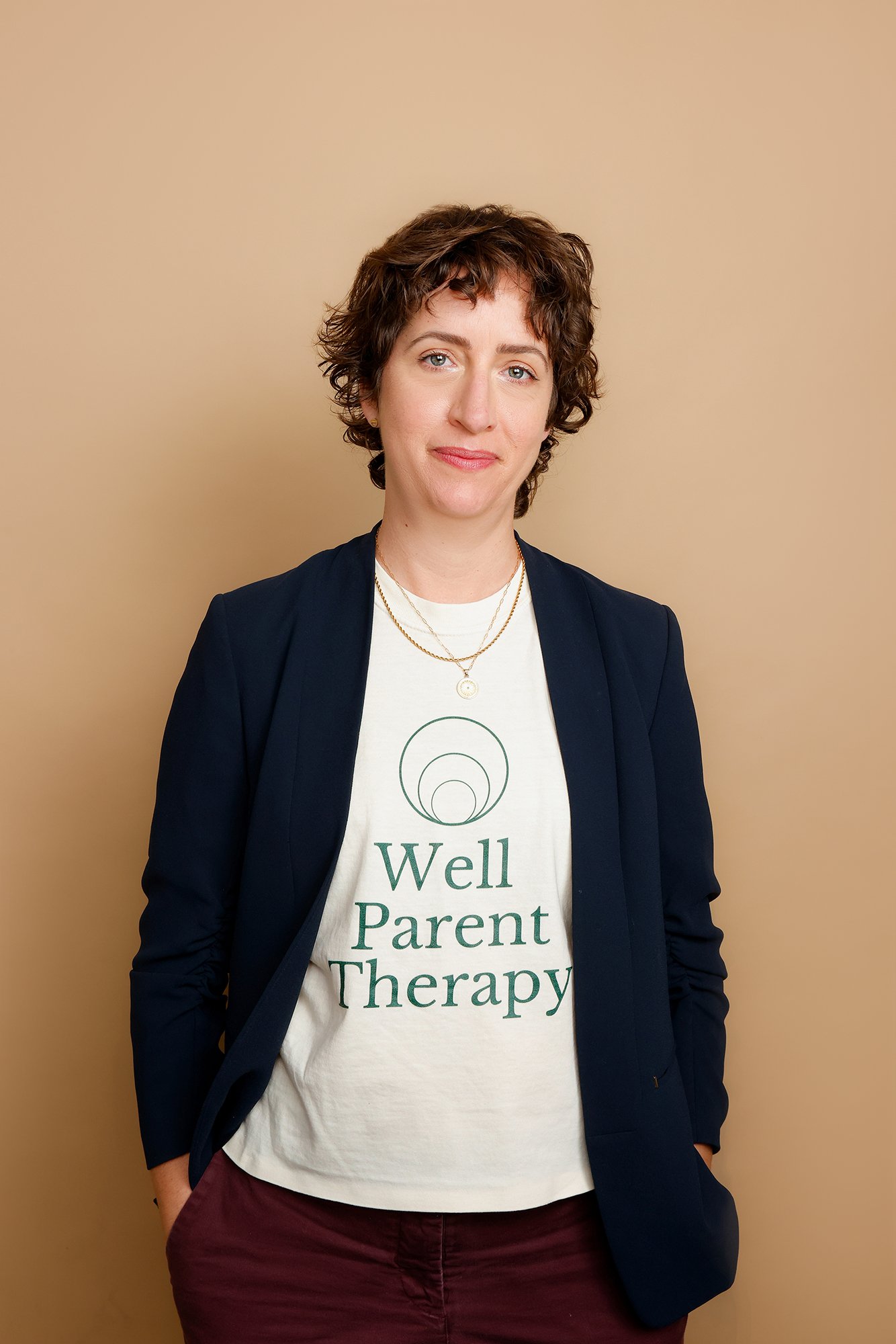
Ana Velouise (she), LMFT, PMH-C
Does this sound familiar?
This isn’t going how you thought it would. You want to feel confident and hopeful in your transition to parenthood, but instead you feel inadequate, irritable, and that despite all your efforts, it’s never good enough. Perhaps you find your relationships with your partner, friends, and family are strained because they just don’t seem to understand what you’re going through. Maybe you’re overwhelmed and frustrated by the gap between your expectations and the reality of your experience.
Whether you’re trying to conceive, you’ve recently experienced a pregnancy loss, or you’re newly postpartum, this is the place for you.
Life doesn’t have to stay this way. It may feel impossible now, but you can feel emotionally stable again. You can improve your communication with your loved ones so that you receive more help and understanding. You can prioritize your wellbeing without neglecting your responsibilities.
Together, we’ll process your past experiences so they’re not haunting your present and develop new coping skills to be better equipped for future stressors.
SPECIALITIES
Navigate the waiting process and the ups and downs of fertility treatments with the support of a therapist who is trained in the particulars of infertility. Learn more.
Process your grief and find emotional steadiness again with a therapist who is trained in pregnancy loss and won’t sugarcoat your experience. Learn more.
Reconnect to yourself and develop more emotional stability with the help of a perinatal mental health specialist you can trust. Learn more.
Feel seen and understood during the hurdles and joys that can accompany building your family as an LGBTQ+ parent alongside a therapist who is also a fellow queer parent. Learn more.
Find your center amidst the chaos and shift your twin parenting experience with the help of a fellow twin parent and therapist who is knowledgable about the impact of multiples. Learn more.
Hi, I’m Ana (“Aw-na”).
I will be in the messy, hard parts of your parenting journey with you.
I provide counseling to people navigating the transition to parenthood using evidence-based mental health modalities.
Therapy with me will support you in developing a more positive self-image as a capable and resilient person. You’ll grow confidence in your unique strengths, learn new coping skills that are realistic for this season of life, and shift intergenerational patterns to create a positive legacy for future generations.
How It Works
-
Your first step is to book a free 20-minute video consultation here. You can get a sense of whether we’d be a good fit to work together and I’ll answer any questions you have.
-
Join me each week to check in on updates, collaborate on our focus for that session, and close with takeaways and between-session fieldwork. You’ll enhance your understanding of your current distress, learn new, realistic coping tools, and improve your emotional wellbeing.
-
I’ll be in the messy, hard parts of your experience with you. Together, we’ll work to process past experiences, learn new ways of relating to yourself and others, and bolster your confidence to feel strong enough to deal with any future stressors.
Therapy isn’t just good for you, it benefits all those around you, too.
From the Blog
The end of a meaningful relationship can shake even the most grounded, successful people. This is often when people realize that they could use more than week-to-week therapy and one-size-fits-all coping skills. They want clarity, insight, and a way to prevent repeating the same relationship patterns. For many, a therapy intensive offers exactly that.
Welcoming twins is a profoundly joyful and transformative experience — but it’s also a uniquely demanding one. Developing a postpartum plan in advance is one of the most practical steps you can take to support your whole household’s wellbeing during this intense time.
After a miscarriage, TFMR, stillbirth, or other fertility loss, many parents expect that a new pregnancy will finally bring relief. Instead, it often reawakens grief. The emotional terrain of pregnancy after loss is complex, and your reactions—whatever they are—make perfect sense in the context of your prior experiences.
Whether you’re navigating fertility challenges, early parenthood, or the emotional complexity of balancing career and family, your time and energy are precious. When life is full, choosing the right therapy format can make all the difference.
Whether you’re in the early stages of exploring options, in conversations with your partner to resolve key differences, or ready to take the next step, understanding the routes available and preparing emotionally for the journey can help you feel grounded and connected throughout the process.
While the birthing parent experiences a physical connection through pregnancy and birth, the non-gestational parent may wonder how to step into their role and nurture attachment. The good news: bonding is not limited to biology! With intention, presence, and patience, non-gestational parents can build strong, lifelong connections with their children that start from infancy.
Wondering if a therapy intensive is the right fit for you? If weekly sessions feel hard to sustain with your work schedule—or if you’re craving faster progress—therapy intensives may be the answer. Learn who benefits most, what to consider before booking, and how intensives like EMDR therapy or couples intensives in LA can help you move forward.
As a reproductive therapist, I’ve seen how this season of life can test communication, intimacy, and connection for couples, but also how it can create profound closeness when prioritized as an important source of support.
When you’re navigating the tender seasons of trying to conceive, pregnancy loss, or being postpartum, you may find yourself wondering where to turn for support. You may already know that therapy can help—but choosing between individual vs group therapy can feel like another decision on an already full plate.
Sometimes, when words fall short, metaphors can help us capture the experience. Researcher and RN Cheryl Tatano Beck conducted a qualitative study exploring how parents describe the reality of parenting twins during that first year, and the metaphors they used beautifully reflect the emotional landscape of raising multiples.
Intensives are extended therapy sessions—often lasting several hours in one day or across a weekend—that allow you to go deeper, faster. Instead of unpacking a little each week, you can focus deeply and move through the layers of what’s weighing on you in a more concentrated and healing way.
You’ve just brought your baby home, and everyone keeps telling you how magical this time is supposed to be. But instead of soaking in the newborn snuggles and taking endless photos, you find yourself crying for no clear reason, snapping at your partner, or feeling numb and disconnected from it all. You’re wondering: Is this just baby blues, or is it something more?
Support groups can be deeply healing—but they can also stir up complex emotions, especially for people who are navigating fertility challenges, pregnancy, or postpartum recovery. Instead of rejecting groups as a source of support, understanding why this happens can help you approach groups with more compassion for yourself and clarity about what to do when triggered.
The journey to become pregnant can be emotionally and physically demanding, with waiting periods often being one of the most challenging aspects. Whether you're waiting for your period to arrive (or not), test results, the outcome of an IVF cycle, or the next step in your treatment plan, the uncertainty can feel overwhelming.
Birth is often portrayed as a joyful and transformative experience, but for many parents, it can be deeply distressing or even traumatic. This blog post explores birth trauma definition, causes, signs and symptoms, and treatment options.
EMDR (eye movement desensitization and reprocessing) is a powerful trauma processing therapy that utilizes bilateral stimulation to unlock maladaptively stored memories. If you're new to EMDR therapy and don't know how to prepare yourself for the process, here are some basic guidelines to follow.
If you’ve ever been in therapy, you know how valuable it can be to have a safe space to explore your thoughts, emotions, and challenges. Many people find that support groups add an extra layer of healing, connection, and insight that one-on-one therapy alone may not provide.
Despite increasing societal acceptance, LGBTQ+ individuals continue to face persistent stigma and discrimination. These ongoing stressors contribute to significant social and health disparities within this community.
Infertility can be a deeply distressing experience, affecting millions of individuals and couples worldwide. For many, the inability to conceive shatters long-held dreams and expectations of parenthood.
You might expect an instant, magical connection when you bring your newborn home. However, the reality of bonding with a baby can be quite different. It's perfectly normal for that rush of love and attachment to develop.
Parenthood is often framed as a journey of joy, discovery, and love. But for LGBTQ+ parents who grew up with unhappy childhoods, raising children can also bring up deep emotional wounds.
If you're undergoing EMDR therapy or considering it for trauma healing, you may wonder about its aftereffects. While each person's experience is unique, many patients report common physical, cognitive, and emotional changes following EMDR sessions.
Miscarriage is a tragically common experience, affecting up to 1 in 5 clinically recognized pregnancies. Despite its prevalence, the emotional impact of pregnancy loss is deeply personal and often profoundly difficult to navigate.
People of all ages in all eras took stock of themselves. In today’s digital age, unfortunately, this healthy process can rapidly devolve into low self-esteem. When we compare ourselves to others — from celebrities to random internet people — we’re trying to match up with carefully curated and modified images. This leaves us chasing unrealistic standards and perfectionism.
Understanding the unique mental health obstacles that parents of twins face—and finding effective strategies to manage them—is crucial for long-term well-being. While the challenges of raising twins can feel overwhelming, there are ways for parents to protect their mental health and find balance.
Birth trauma can be a complex and deeply personal experience that affects many new parents. While childbirth is often portrayed as a joyous occasion, for some, it can be a source of physical or psychological distress.
While it's normal to experience some worry or doubt as a new parent, persistent feelings of extreme sadness, loneliness, or severe mood swings may indicate postpartum depression (PPD).
Living with post-traumatic stress disorder (PTSD) can feel like navigating a minefield, where you’re not sure when the next trigger will stimulate your fight-or-flight response. If you’re also caring for a baby after a traumatic birth, you could be feeling exposed, raw, and jumpy; sensations made even more acute by the lack of sleep and elevated hormones.
Eye movement desensitization and reprocessing (EMDR) is a unique, evidence-based therapeutic technique that helps individuals process and heal from traumatic experiences and distressing life events. EMDR has recently gained recognition as a highly effective treatment for trauma conditions. But how exactly does it work?
We all process grief in different ways. For some people, the grieving process can feel like being caught up in a whirlwind of emotions, with no way to slow them down or make sense of them.